

As the world marks World Theatre Day on March 27, this year’s theme—“Theatre in a Culture of Peace”—feels especially resonant. In an era of constant noise, division, and digital overload, theater continues to offer something rare: shared presence, emotional connection, and a space where stories unfold in real time.
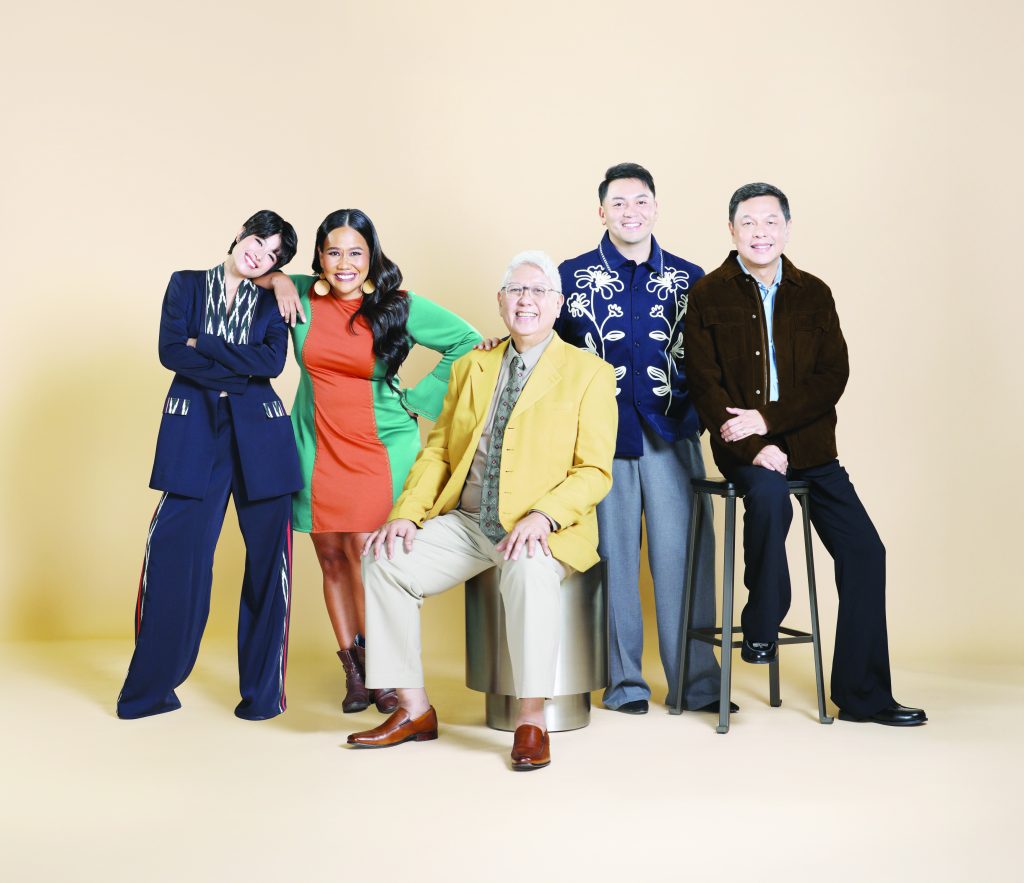
For three artists spanning generations and styles—National Artist for Music Ryan Cayabyab, rock icon Jett Pangan, and rising powerhouse vocalist Sofronio Vasquez — the stage is not merely a place to perform. It is where identity is shaped, community is formed, and meaning is negotiated.
Their reflections reveal how Philippine theater and live performance continue to gain ground—not by competing with technology, but by offering something technology cannot replicate: human connection.
Q&A: On inspiration, audience, and the meaning of peace
What first drew you to live performance? What is a memorable live performance for you?
Ryan Cayabyab:
Ballet Ramahari and my first musical, Katy, were defining experiences. I wasn’t just composing—I was conducting and performing live with singers and musicians. Live performance is magical because you are part of something happening in the moment. Each person’s contribution matters. A small role can affect the entire production. Everyone—stars, chorus, musicians—is a piece of the puzzle.
Jett Pangan:
The first concert that truly inspired me was seeing Rico Puno at the Folk Arts Theater in the 1970s. He was a powerhouse on stage—dressed in all white, gyrating with the microphone, completely commanding the audience. Then he started singing, and that voice—my God. That was when I realized becoming a singer was something I wanted to pursue seriously.
Sofronio Vasquez:
Naalala ko when I was about six years old, I watched my father perform with a male choir singing “Corner of the Sky.” That moment had a huge impact on me. I was struck by the harmony and the freedom on stage. Sabi ko sa sarili ko, gusto kong nasa stage din ako. Bata pa ako, hindi ko pa ma-explain, but I felt it in my heart.
How does the audience shape a performance?
Cayabyab:
Theater is collaborative, but the audience completes the experience. Kapag may audience na, nagiging buhay ang palabas. Their reactions and presence transform it into something real.
Pangan:
A friend once described one of our shows as something we needed amid all the negativity online—like a “brain rinse” for Manila. That’s what live performance can do. It clears your mind, refreshes you, and reminds you how much we have to be proud of as performers and audiences.
Vasquez:
Malaking part talaga ang audience. I draw energy from them. Mas mahirap kumanta kapag walang live audience because there’s no reaction to feel. I watch their faces, make eye contact—doon ako kumukuha ng lakas.
What does “Theatre in a Culture of Peace” mean to you?
Cayabyab:
Artists respond to what is happening around them, sometimes by challenging it. But theater also gathers people together in one space to listen and reflect. In that sense, it contributes to peace by creating dialogue and shared experience—sabay-sabay tayong nakikinig at nag-iisip.
Pangan:
Live performances remind us that we are human first, not defined by divisions. For a few hours, everyone shares the same experience. That alone is powerful.
Vasquez:
Para sa akin, peace begins within the performer. Kapag hindi ka at peace, ramdam agad sa delivery mo. But when you perform with real inner calm, that feeling reaches the audience even if the performance isn’t technically perfect.
Why Theatre continues to gain ground
Theatre endures not because it resists change, but because it fulfills a fundamental human need: to gather, witness, and feel together. In a world increasingly mediated by screens, live performance offers something no recording can replicate—immediacy. What happens on stage unfolds in real time, unpredictable and unrepeatable.
In a climate of fragmentation, it also creates shared experience. The stage remains one of the few places where strangers become a temporary community, bound by story, sound, silence, and applause.
World Theatre Day ultimately celebrates this collective act. Every performance requires not only artists but also audiences willing to show up and share the moment. As Cayabyab suggests, theater can challenge, provoke, or comfort, but it always brings people together. And as Pangan and Vasquez affirm, that connection can refresh, strengthen, and inspire.
In uncertain times, theater does not need to shout to be heard. It simply opens the curtain—and waits for audiences to enter.
What’s It All About?—Celebrating the Music of Burt Bacharach

May 15–17, 2026 | Proscenium Theater, Rockwell Center
- National Artist Ryan Cayabyab returns to the stage
- Masterclass-style concert blending storytelling and performance
- Songs from Burt Bacharach’s legendary catalog
- Featuring Jett Pangan, Sofronio Vasquez, Bituin Escalante, Gigi De Lana, and Baihana
- Intimate 776-seat venue with exceptional acoustics
More than just a concert hall, the Proscenium Theater offers a rare, immersive live experience. Designed for intimacy and natural acoustics, the venue allows audiences to feel unusually close to the performance — every nuance of voice, instrument, and emotion carries clearly through the space. For Cayabyab, this immediacy transforms a show into a shared moment rather than a distant spectacle.
Set within Rockwell Center, the theater also anchors a complete evening out. Guests can dine, stroll, and linger before or after the performance, turning the event into a cultural experience rather than a hurried visit. Cayabyab describes the theater as a crown jewel in a vibrant setting — an ideal stage for a masterclass-style production that thrives on storytelling, musical detail, and connection.
Audiences can expect beloved classics including “What the World Needs Now Is Love,” “Raindrops Keep Fallin’ on My Head,” “I Say a Little Prayer,” and “Close to You,” performed in fresh interpretations that highlight Bacharach’s timeless songwriting.