

In construction, finishing materials are what ultimately give a space its character. They are the elements that transform a structure from something merely functional into something beautiful, distinctive, and purposeful.
Among these materials, one product has steadily grown in importance over the past decades: High-Pressure Laminate (HPL).
What makes HPL particularly interesting is that its story began more than a century ago with a relatively simple purpose. It was developed primarily as a practical surface solution for countertops, at a time when contractors were looking for materials that were durable, easy to clean and install, and capable of withstanding everyday use.
But like many successful materials, HPL did not remain confined to its original application.
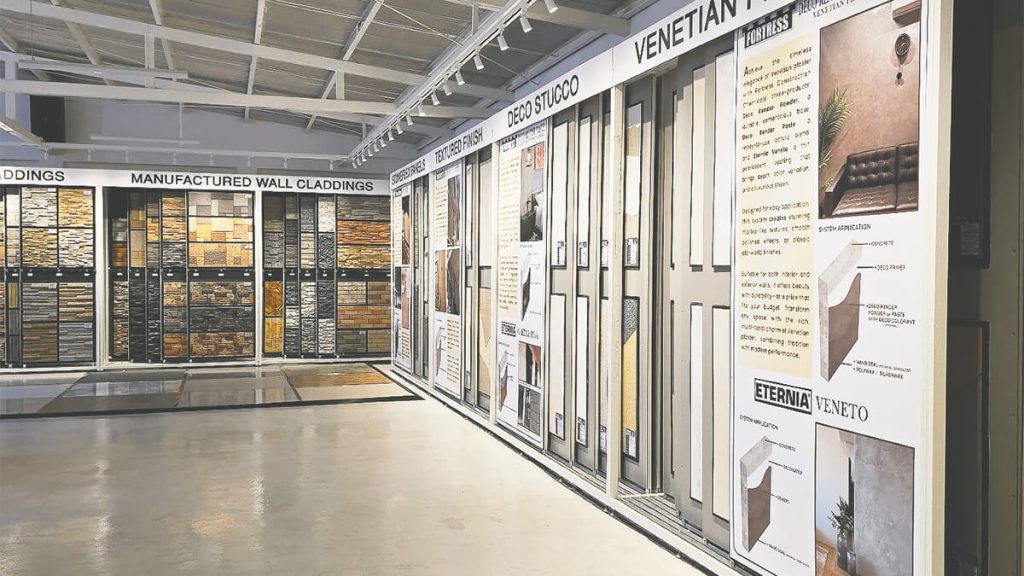
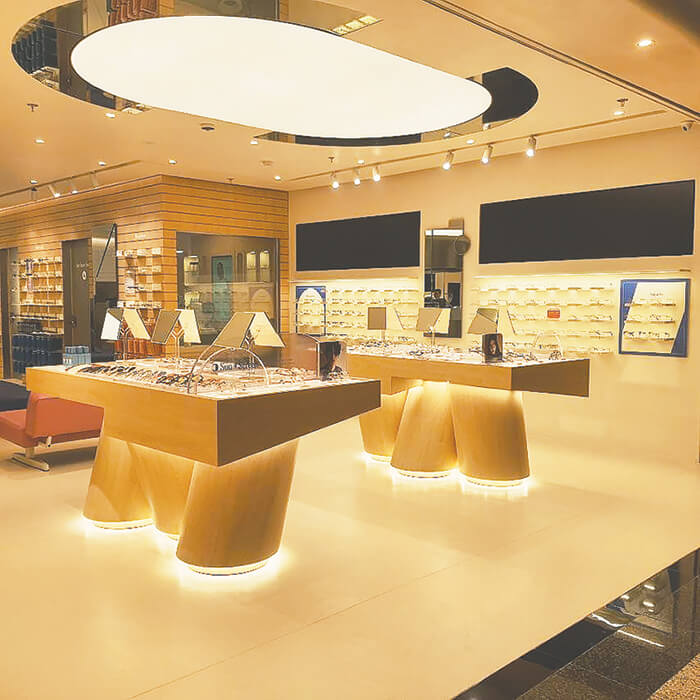
Over the years, its use evolved from kitchen countertops and tabletops into furniture, doors, wall surfaces, partitions, and even ceilings. As manufacturers introduced a wider range of colors, patterns, textures, and finishes, the possibilities became almost limitless. Retail stores, malls, offices, hotels, and residential spaces could suddenly achieve more sophisticated designs without sacrificing practicality and speed of delivery.
I remember my good friend, Joseph Ang of Multi-Rich Home Decors Inc., who introduced Wilsonart laminates into the Philippines in 1992. At that time, the market had only around 11 color selections available. Joseph helped change that landscape by introducing 156 colors in one go.
It may seem like a simple expansion of a product range today, but at the time, it was a significant shift in how designers and contractors looked at laminates. It demonstrated that a material could be both practical and expressive—that durability did not have to come at the expense of design.
So, what comes next?
This is where the industry becomes even more interesting.
Today, cheaper alternatives are flooding the market. With improvements in manufacturing technology, consumers now have more choices than ever, often at significantly lower prices. For many buyers, the initial decision can be as simple as comparing colors, appearances, and price tags.
But experienced professionals know that what looks similar on the surface does not necessarily perform the same way underneath.
This is where established international brands such as Wilsonart have continued to distinguish themselves. Rather than competing solely on price, they have focused on maintaining product quality, performance, innovation, and consistency—values that have allowed them to remain relevant despite the market’s growing demand for cheaper alternatives.
And this brings us to two words that I believe will define the future: education and evolution.
Education: Understanding what you don’t see
Educating users about the difference between quality and cheaper materials is not easy. For many end users, the decision is understandably driven by aesthetics. If two surfaces look almost identical, why pay two or three times more for one of them?
This is where professionals in the construction industry have an important role to play. We need to look beyond what is immediately visible and understand why one material costs more than another. With HPL, quality is often found in the things you don’t see.
For example, Wilsonart HPL products incorporate an overlay that provides additional wear resistance and UV protection. These features may not be obvious when looking at a sample, but they can have a significant impact on how the surface performs and looks after years of use.
The same principle applies to impact resistance and durability. A quality HPL can provide greater resistance to everyday abuse, helping protect surfaces from scratches, dents, and general wear—something that becomes particularly important in high-traffic commercial and retail environments.
The lesson is simple: don’t judge a surface only by how it looks on the day it is installed. Judge it by how it will look and perform years after installation. We are playing the long game of things.
Evolution: Staying relevant in a changing market
But quality alone is not enough. Every material must evolve. The moment a material stops improving, it risks becoming irrelevant. Markets change, technology advances, and consumer expectations continue to rise. HPL is no exception.
Today, we are seeing high-end surface technologies that would have been difficult to imagine when laminates were first introduced. Anti-fingerprint surfaces such as Veltouch, for example, address a very modern consumer expectation: a surface that remains clean-looking and refined even with constant touch.
New technologies such as PURECORE, with its transparent sheet concept, are another example of how the laminate industry continues to push beyond the traditional definition of what an HPL can be.
HPL has also evolved beyond traditional interior applications. Today, we are seeing laminate technology move into exterior wall surfaces, opening up an entirely new range of possibilities. With WILSONART SPC, these surfaces can even be customized with your own designs, allowing architects and designers to push creativity beyond conventional boundaries. From interiors to exteriors, from standard finishes to fully customized surfaces, the possibilities for this material are becoming almost limitless. The sky is truly the limit.
These developments remind us that a product is not simply an old material trying to survive in a new market. It is a material that continues to reinvent itself. And perhaps that is the reason it has remained relevant for so many decades.
Our role as an industry
As someone involved in both construction and retail, I believe our responsibility goes beyond simply selling materials. Our job is also to educate. We need to help our clients understand the difference between a material that is simply attractive today and one that will continue to perform tomorrow.
The best material is not always the most expensive material. Likewise, the cheapest material is not necessarily the best value. The right choice depends on the client’s needs, aspirations, application, expected lifespan, maintenance requirements, and budget.
That is where a good supplier becomes more than just a supplier. We become a guide.
Like any material, the future of HPL will not be determined by price alone. It will be determined by how well the industry continues to educate its users, improve its products, and respond to the changing demands of designers, contractors, and end users.
After more than a century, HPL has already proven that it can evolve. The question is no longer whether a product will survive. The more interesting question is: what will it become next?
And perhaps, as an industry, we have a role in shaping that answer.
#PhilSTARPropertyFeature
#FeaturedStory