


Our experience at Alibaba was more than a visit to one of the world’s most recognized technology companies. It was an opportunity to look beyond the scale of its operations and understand the vision, culture, innovation, and mindset that have enabled Alibaba to evolve from a bold idea into a global technology ecosystem.
Visiting Alibaba’s headquarters gave us a glimpse into the company’s remarkable journey—how a vision to empower businesses through technology grew into an expansive ecosystem serving millions of businesses and consumers. What stood out was that its success was not built on technology alone. It was anchored in a clear purpose, strong customer orientation, a culture of innovation, and the ability to anticipate and adapt to change.
The experience reinforced an important lesson: sustainable growth begins with vision, but it is sustained by people, culture, innovation, and the courage to constantly reinvent.
Seeing innovation in action
Our visit to Alibaba’s innovation facilities added another dimension to the experience. Seeing robotics, automation, data-driven systems, and other emerging technologies demonstrated how ideas that once seemed futuristic are already becoming practical business solutions.
Particularly fascinating was seeing how artificial intelligence is being integrated into actual business processes. AI is no longer simply a tool that assists employees with individual tasks. It is increasingly becoming an intelligent working partner—capable of processing information, analyzing data, generating content, supporting decision-making, automating repetitive processes, and helping businesses respond faster.
We explored AI-powered tools and capabilities that can customize business processes based on human input. People provide the direction, context, creativity, and judgment, while AI can execute, analyze, organize, and accelerate much of the work needed to deliver the desired output.
This does not mean replacing people. Rather, it challenges us to rethink how people work. AI can take on repetitive and time-consuming functions, allowing people to focus on areas where human judgment, creativity, relationships, empathy, and strategic thinking remain indispensable.
The real opportunity lies in learning how to make humans and AI work better together.
A new business reality
We also visited companies that have successfully integrated AI into their operations, many with businesses and applications relevant to the industries represented by our delegates.
The contrast with the way many businesses operate in the Philippines was striking.
Back home, many organizations are still working through fragmented processes, manual systems, siloed information, and decision-making that depends heavily on individual experience. Technology can sometimes be viewed as an additional expense or support function rather than an integral part of business strategy.
What we witnessed in Alibaba’s ecosystem was a different mindset. Technology is embedded in the business model itself. Data is continuously generated, captured, analyzed, and translated into action. Customer behavior can inform decisions in real time. Automation reduces repetitive work, while AI enables organizations to personalize services, improve productivity, anticipate customer needs, and respond faster to market changes.
The difference is not simply about having more advanced technology. It is about how technology is woven into the DNA of the organization.
This is perhaps one of the biggest takeaways for Philippine businesses. We do not need to replicate Alibaba’s scale or systems. What we need to embrace is the mindset of asking: How can technology make our businesses smarter, faster, more customer-centric, and more competitive?
For retailers, franchisors, manufacturers, entrepreneurs, and other business leaders, this means looking at AI not merely as a technological trend but as a business transformation opportunity.
Learning beyond business boundaries
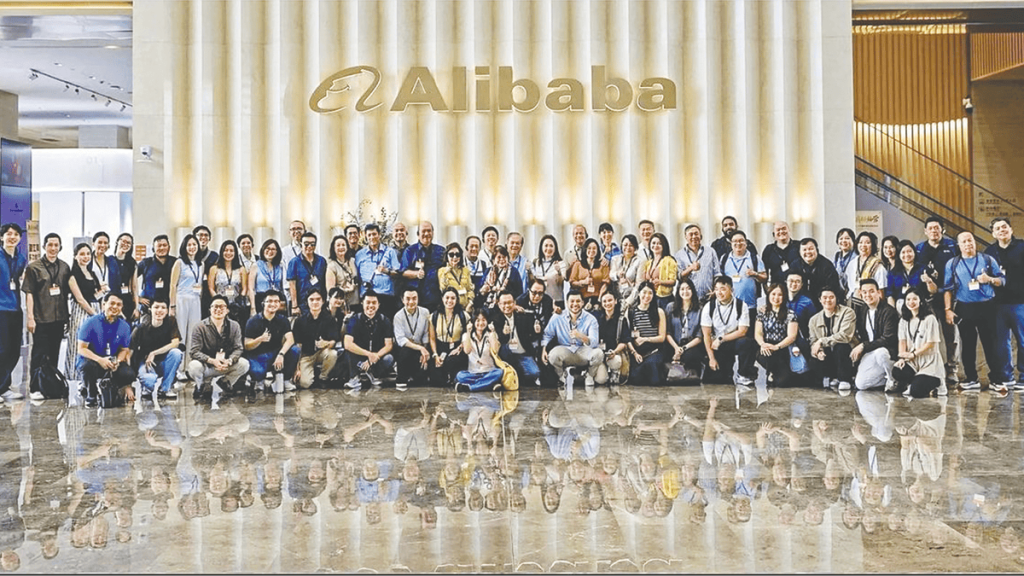
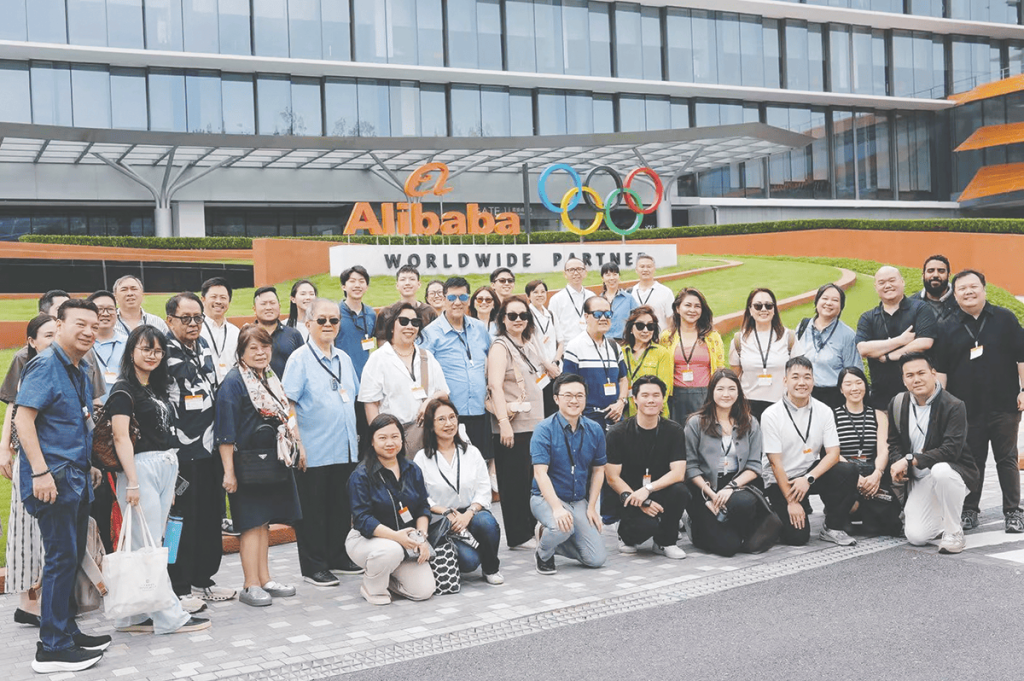
Equally valuable was the collaborative experience among the business delegates from the Philippine Retailers Association (PRA) and the Philippine Franchise Association (PFA).
Bringing together leaders and professionals from different sectors created an environment where experiences, ideas, challenges, and solutions could be openly exchanged. Each delegate brought a unique perspective shaped by a different industry, customer base, and business model.
Another important lesson emerged: competition and collaboration can—and should—coexist.
Businesses may compete fiercely in the marketplace, but there are areas where collaboration benefits everyone. Learning from one another does not weaken our competitive position. On the contrary, it can raise the standards of the entire business community.
The conversations among the delegates became an important part of the Alibaba journey. We learned not only from the companies we visited, but from one another. A question from one participant could lead to another insight, while a challenge experienced in one industry could offer a solution to another.
This kind of cross-industry exchange is particularly important in an era when the pace of change is faster than ever.
AI makes collaboration even more important
Artificial intelligence is changing how companies understand their customers, develop products, manage operations, market their businesses, make decisions, and create new revenue opportunities.
But the speed and complexity of AI also make it clear that no single company, industry, or individual can have all the answers. This makes collaboration even more important.
We need business leaders willing to learn from technology companies, entrepreneurs willing to learn from established corporations, retailers who can learn from franchisors, and industries willing to share experiences rather than operate in isolation.
The future will favor organizations that are not only technologically capable but also curious, adaptable, open to learning, and willing to collaborate beyond traditional boundaries.
Bringing the learning home
The Alibaba experience was much more than a company visit. It was a journey from understanding vision and culture to witnessing innovation, exploring AI applications, and reflecting on how Philippine businesses can prepare for a rapidly changing future.
It reminded us that innovation is not simply about having the newest technology. Technology becomes meaningful when it solves a problem, creates value, improves lives, enhances the customer experience, or enables people and businesses to perform better.
For us in the Philippine business community, the challenge now is to bring these lessons home—not to copy Alibaba, but to translate what we have learned into solutions relevant to our own businesses, markets, and people.
We need to ask ourselves necessary questions: Are our businesses ready for AI? Which processes can be transformed? How can we use data more effectively? How can we improve customer experiences? How can we equip our people with the skills they need for the future? And how can we ensure that technology creates meaningful value rather than simply becoming another buzzword?
Our experience with the PRA and PFA delegates also reinforced that we do not have to navigate this transformation alone.
Competition pushes us to improve. Collaboration enables us to learn faster. Innovation allows us to move forward.
When these three forces come together, we can create a stronger, more resilient, and more future-ready Philippine business community.
The Alibaba journey opened our minds to what is possible. Now comes the more important part—turning those insights into action and using technology, innovation, and collaboration to build businesses that are more competitive, relevant, and sustainable for the future.
Competition may drive us to become better, but collaboration allows us to become greater together.
#PhilSTARPropertyFeature
#FeaturedStory