

The Philippine office real estate sector is quietly regaining momentum in 2025, defying a complex backdrop of global economic uncertainty, geopolitical tensions, hybrid work disruptions, and uneven capital flows. While risks remain pronounced, current data points to a market that is not rebounding sharply but stabilizing and structurally repositioning for growth.
At the core of this recovery is resilient demand, particularly in Metro Manila. Total leasing activity reached approximately 460,000 square meters in 2025 (+ 15% year-on-year), signaling growing occupier confidence. This is a critical inflection point after years of negative absorption and elevated vacancies driven by pandemic-era disruptions and the exit of Philippine Offshore Gaming Operators (POGOs).
The primary force behind the sector’s recovery remains the IT-BPM industry. In 2025, BPO firms accounted for roughly 64% of total office leasing activity, reaffirming their dominance as the backbone of demand. Even more telling is that the sector is evolving, not contracting. Beyond BPOs, demand is being reinforced by multinational corporations expanding or consolidating operations, financial and professional services firms upgrading to prime office space, and government agencies, which continue to absorb space in key locations. This diversification suggests that demand is becoming more resilient and less dependent on a single tenant class.
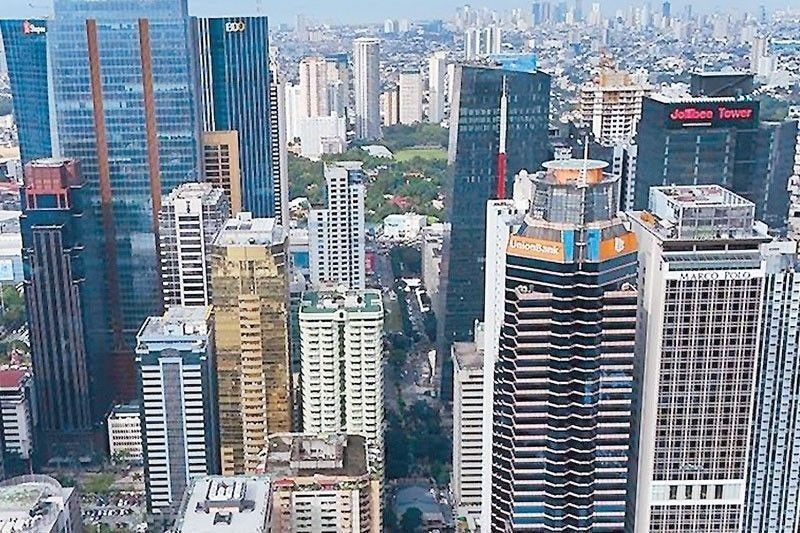
The recovery, however, is not uniform. Prime business districts such as Makati and Bonifacio Global City are leading the rebound. These areas recorded 120,000 sqm and 150,000 sqm of leasing activity respectively in 2025, driven by their superior infrastructure and talent accessibility. Vacancy rates further illustrate this divergence: Makati CBD: ~8–12%; BGC: 17%; and fringe locations, such as the Bay Area: above 30%. This reflects a clear “flight-to-quality” dynamic, where tenants are upgrading to premium buildings without significantly higher costs due to market conditions. At the same time, provincial markets are gaining traction, particularly among BPO firms seeking cost efficiencies and access to new labor pools. Cebu led the provincial BPO leasing activities in 2025, while emerging hubs include Iloilo, Davao, and Pampanga.
Vacancy levels remain elevated at around 19%, with projections of further increases due to incoming supply. However, this has created a tenant-favorable environment, unlocking demand in several ways: Firms can upgrade to Grade A buildings at minimal cost premium, landlords are offering rent-free periods and fit-out support, and flexible lease structures are enabling expansion despite uncertainty.
Despite these gains, the recovery remains fragile. Global uncertainties—geopolitical tensions such as the conflicts in Ukraine, Israel, and Iran—pose risks through oil price volatility and inflation shocks, including possible increase in benchmark interest rates, which could dampen corporate expansion. Domestically, economic growth is projected at less than 6%, limiting the pace of business expansion. Meanwhile, structural risks persist. These include the high vacancy and the resulting oversupply, foreign investment sensitivity, particularly given reliance on multinational occupiers, and hybrid work models, which continue to reduce space per employee.
In conclusion, the Philippine office market is not experiencing a traditional recovery; it is undergoing a strategic reset. Demand is real, but selective. Growth is present, but uneven. Risks are significant, but manageable. What ultimately underpins this recovery is discipline across the market with developers pacing new supply and prioritizing committed tenants over speculative expansion, landlords focusing on occupancy and tenant retention rather than rental escalation, and occupiers expanding in a measured manner, favoring flexibility, quality, and efficiency. This collective restraint will address the current oversupply and allow the office market to gain more ground for recovery.
#PhilSTARPropertyFeature
#FeaturedStory