


CBRE Philippines unveils halftime report, discusses real estate opportunities with Michelin Guide and Phl coffee industry
CBRE Philippines invited members of the media to a roundtable briefing on August 18 in Makati City to discuss its latest market report for the second half of 2026.
The Michelin opportunity

Under the report’s retail section, CBRE highlighted that the real estate industry can look beyond LEED, WELL, BERDE or WiredScore by considering another certification: Michelin.
“We’re looking at certifications like Michelin, which have been garnering popularity,” said Maam Argos, head of Transaction Management and Retail at CBRE Philippines.
Landlords are pondering the benefits brought by the 2026 Michelin Guide. Makati serves as the mecca, housing several Michelin-Selected and Bib Gourmand restaurants, as well as six Michelin-starred restaurants. Other hotspots or white spaces include:
● Alabang — concentration of affluent neighborhoods
● Quezon City — largest population and youngest pool of educated diners
● Bay Area — access to casino tourism traffic
“The usual spaces that landlords find difficult to lease are now… seemingly more palatable to those Michelin restaurants. Because they don’t usually go for the typical, standard commercial… look,” Argos explained.
On the other hand, the report also highlighted Cebu’s potential, with a total of 18 recognized restaurants, six of which have Bib Gourmand awards. While the region doesn’t have a starred restaurant yet, it presents a significant opportunity.
As stated in the report: “The first landlord that can create the right ecosystem for an intimate, chef-owned, identity-driven, Michelin-starred restaurant will own the bragging rights.”
Coffee shops and the right tenant mix
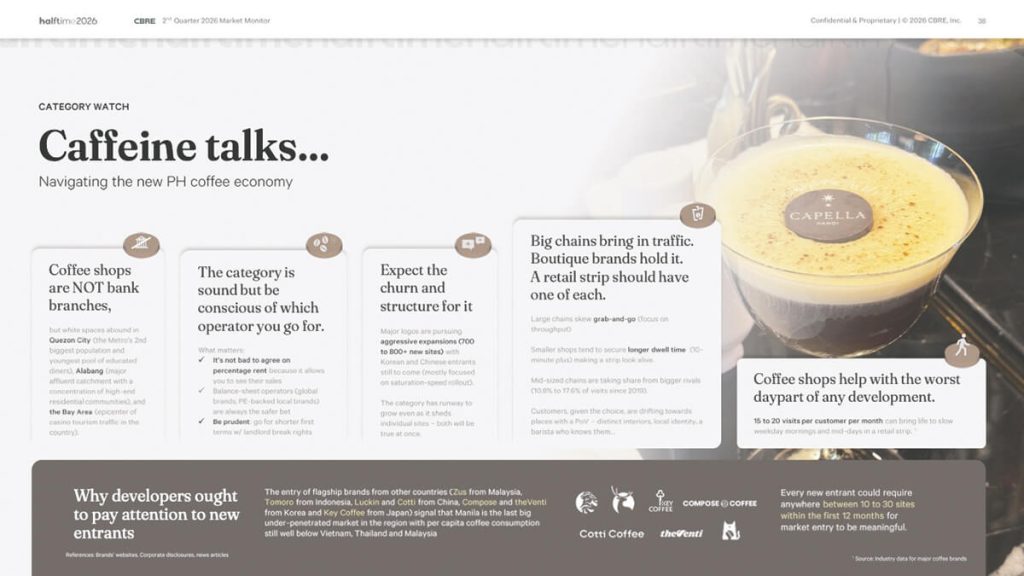
Meanwhile, another prospect people in the real estate industry can consider is the growing Philippine coffee industry. Several coffee players have entered the fray, including international brands from China, South Korea and Japan.
The competitive industry poses a question to landlords: Is it wise to have these coffee shops in their buildings?
Argos explained that it’s beneficial to have a big coffee chain alongside boutique brands: “The bigger the brand is, usually, these are the ones that your customer base come and go. The smaller, more independent, more creative ones are where the younger generations spend a lot of time with. So, it’s good to have a mix of both.”
“It’s not far that if you have the space for it, you’ll have more than two kinds of coffee brands,” she added.
She also noted that while the coffee category is sound, landlords must be conscious of which operators they choose and should expect some churn.
Argos also discussed the potential in fashion, where going provincial is key. The report suggests looking at what’s rising regionally but is not yet saturated locally, such as athleisure and wellness apparel, Korean brands, Chinese new-generation retail and GU, Uniqlo’s “sibling” brand.
Office market’s demand paradox
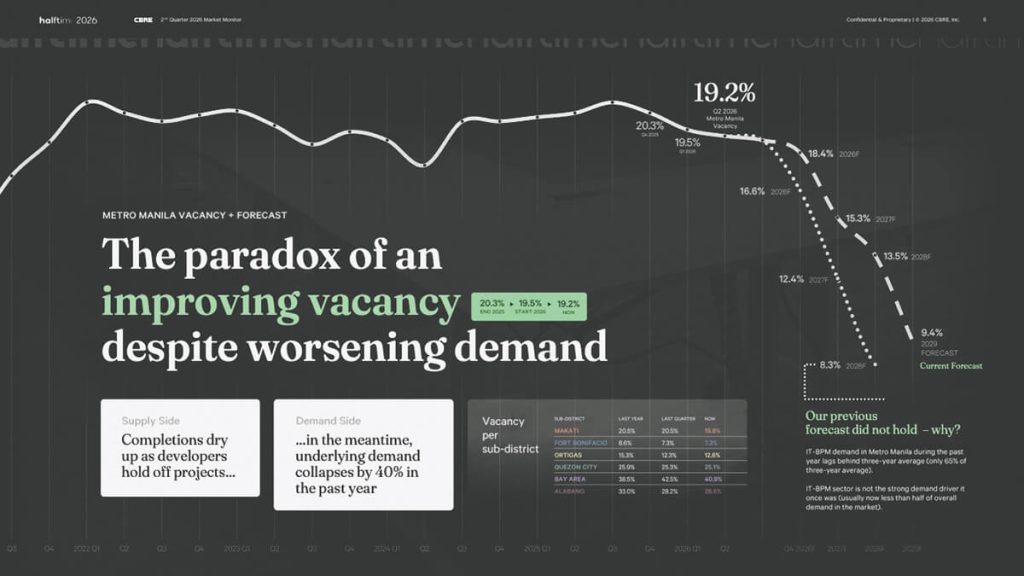
The comprehensive halftime report also discussed several office market trends in Metro Manila, such as the complex “demand paradox” in the area amid its tightening vacancy rate. According to CBRE, this is being driven by the supply side, as real estate developers freeze new construction launches, rather than by a genuine surge in occupier absorption.
While the traditional office leasing sector faced its thinnest quarter in the past five years, the Philippine flexible (flex) workspace sector recorded exceptional growth in the second quarter of 2026.
Different paths outside Metro Manila
Meanwhile, provincial commercial real estate markets showed divergent trajectories in mid-2026. The report provided office real estate updates on key provincial markets, including Cebu, Iloilo, Pampanga/Clark, Davao and Bacolod.
Looking at emerging opportunities
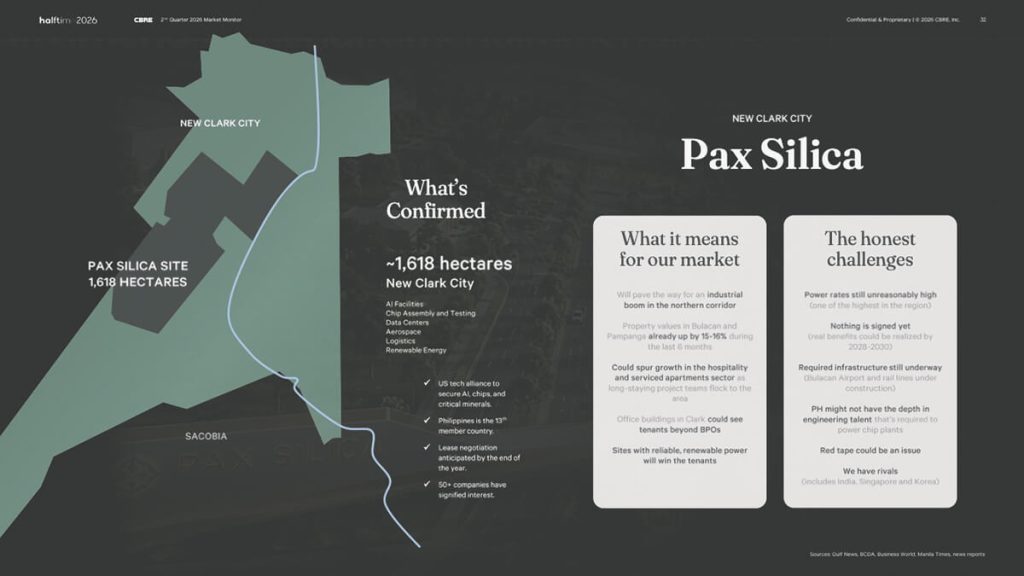
CBRE also included a discussion of the controversial Pax Silica project being planned for the Philippines. It discussed its pros and cons, what it could mean for the market and the challenges it may face if it moves forward.
The report also covered other sectors, including industrial and logistics, hospitality and capital markets.
#PhilSTARPropertyFeature
#FeaturedStory