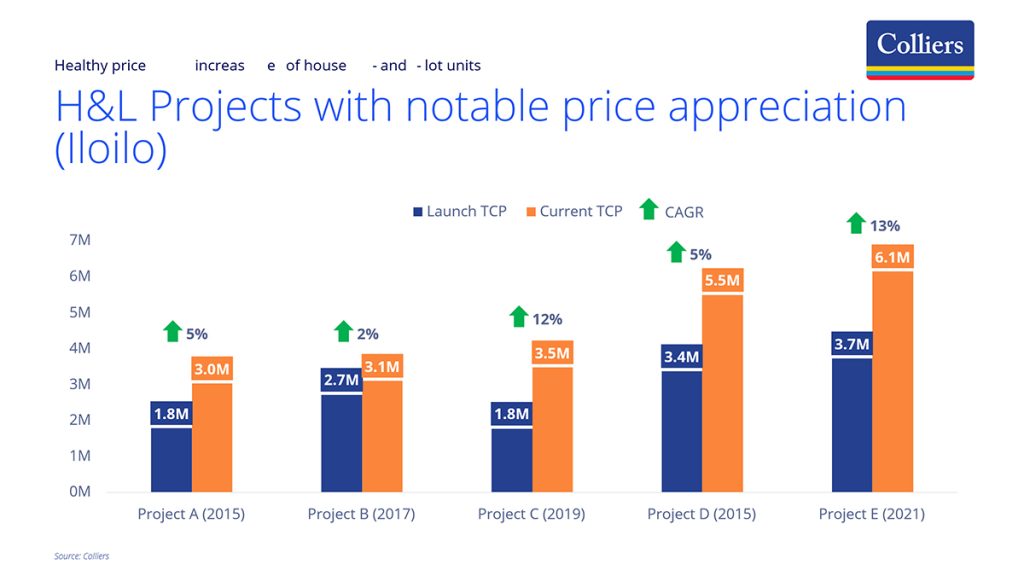


The Philippine property market has always been cyclical. Periods of strong expansion are often followed by phases of slower growth, elevated vacancies, muted sales, or weaker consumer spending. Developers that rely heavily on one-off property sales frequently experience more pronounced swings in revenues and profitability whenever economic conditions deteriorate. In contrast, firms with substantial recurring-income portfolios are often better positioned to weather market volatility and sustain long-term growth. Over the years, we have seen how economic downturns affected Philippine property prices. This was notable during the Asian and Global Financial Crises, H1N1 outbreak, and the COVID-19 pandemic.
Recurring-income assets refer to properties that generate predictable and continuous cash flows through leasing and operations. These include office buildings, shopping malls, logistics facilities, warehouses, hotels, serviced residences, and other income-generating real estate. Unlike residential condominium developments that rely primarily on unit sales, recurring-income properties provide developers with steady rental revenues even during periods when sales activities slow.
Over the years, we have seen how periods of economic uncertainty and global health shocks trembled the Philippine economy. These shocks reverberated across the Philippine economy and property. These periods exhibited how recurring income-generating assets helped shield property developers from the devastating effects of economic meltdowns and global health crises.
Office, retail, industrial, and hotel assets as shock absorbers
The attractiveness of recurring-income assets lies in their ability to diversify risk across multiple sectors.
Office properties continue to provide stable rental streams, particularly when supported by high-quality tenants and long-term occupancy commitments. While vacancies may rise, rental contracts generally provide visibility over future cash flows. Developers with sizable office portfolios are often better insulated against temporary slowdowns in residential demand.
Retail assets offer another layer of stability. Despite evolving consumer preferences, well-positioned malls and lifestyle centers continue attracting tenants and shoppers. In our view, developers are increasingly pursuing premiumization strategies and creating curated destinations to drive foot traffic and support rental growth. Mall vacancies in Metro Manila and key areas outside the capital region have been improving, with retail centers attracting big local and foreign brands, which should sustain healthy leasing levels in the near to medium term.
Industrial and logistics assets have emerged as among the most resilient property sectors. Growing manufacturing activity, supply-chain modernization, and e-commerce expansion continue to support warehouse and logistics demand. Even amid global uncertainty, industrial properties tend to benefit from long-term occupier requirements and strategic location advantages. Colliers Philippines has stressed that industrial fundamentals remain relatively resilient despite economic headwinds. We are seeing more opportunities for the industrial sector, especially with the government propping up the viability of the Luzon Economic corridor.
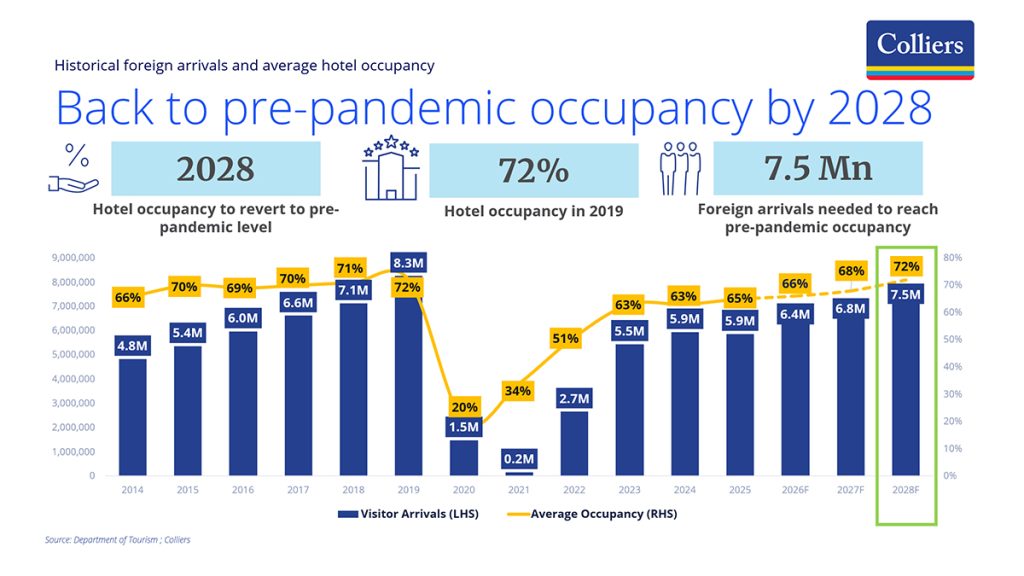
Hospitality assets provide exposure to tourism-led growth. Although hotels are sensitive to travel cycles and economic downturns, the Philippine tourism’s ongoing recovery and rising domestic travel activity are creating opportunities for recurring operational revenues. Hotel properties can also complement other asset classes within mixed-use developments, creating multiple sources of recurring income for property firms. More foreign brands are betting big on Philippine leisure sector, and the thriving meetings, incentives, conferences, and exhibitions (MICE) segment will continue to help raise the competitiveness of the Philippine hospitality sector.
Preparing for the next property cycle
The Philippine property market is likely to continue facing periodic challenges, whether from geopolitical developments, inflationary pressures, policy shifts, global health scares, or economic slowdowns. We believe that Philippine property players cannot control these external forces, but they can build resilience through portfolio diversification.
For Philippine developers, recurring-income assets are no longer merely supplementary components of the portfolio. They are becoming essential pillars of long-term growth. In an environment where uncertainty has become the norm, the ability to generate reliable rental and operating income may prove to be the difference between merely surviving a downturn and emerging from it stronger than before.
#PhilSTARPropertyFeature
#FeaturedStory