

At a time when Philippine real estate is navigating global uncertainty, pressure on household budgets and uneven market conditions, recognition for excellence carries greater weight.
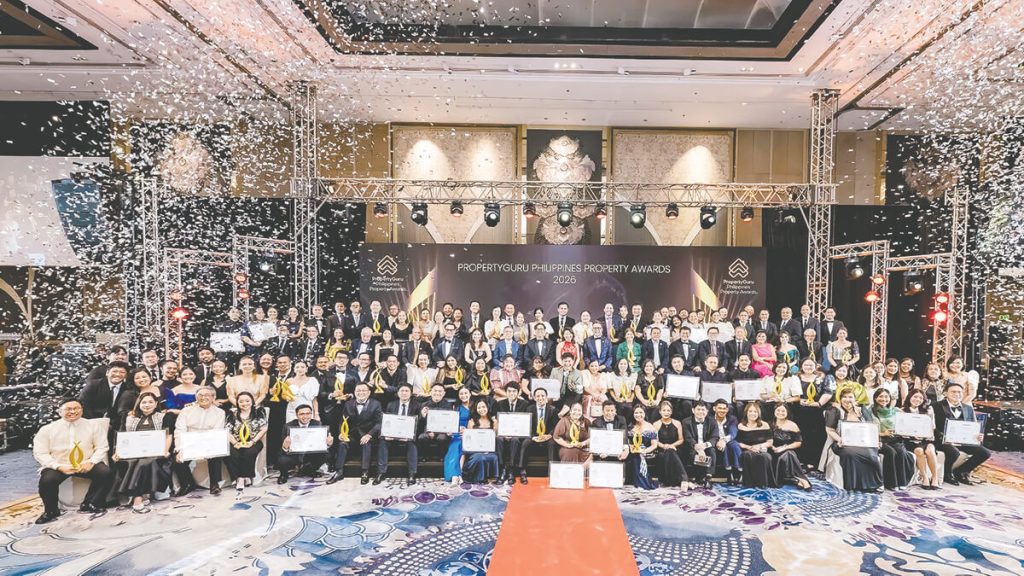
The 14th PropertyGuru Philippines Property Awards, held recently at Shangri-La The Fort, Manila, honored 16 organizations across 46 categories. Beyond the trophies, however, this year’s winners provide a glimpse of how the industry is responding to a more challenging environment—and where its next opportunities may emerge.
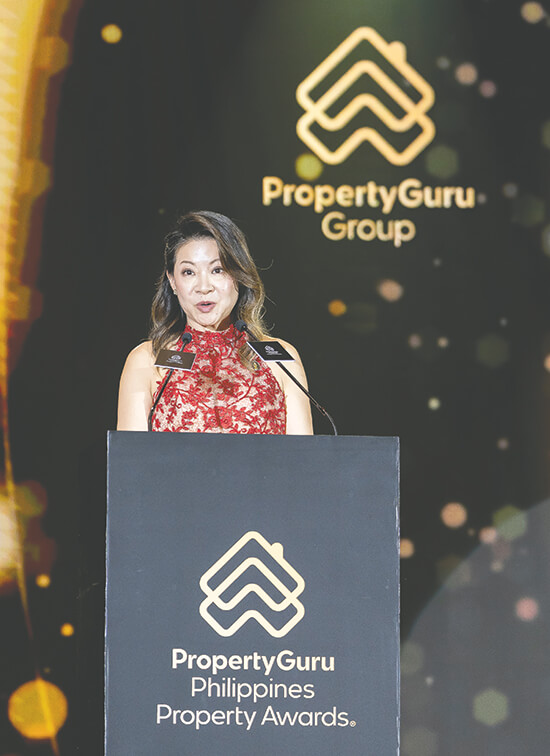
“This past year has not been easy,” said Cyndy Tan Jarabata, chairperson of the independent judging panel and president of TAJARA Leisure & Hospitality Group Inc., citing geopolitical tensions, inflationary pressures, and supply-chain challenges.
“And yet—here we are. Our developers kept building for the Filipino people, finding ways to adapt, innovate, and deliver,” she said.
In an interview with PhilSTAR Property, Jarabata said the market should not be viewed through a single narrative. Instead, she urged the industry to look for “pockets of goodness and excellence” across the Philippines.
Metro Manila itself presents different conditions depending on location, she noted, with Makati and BGC performing relatively well, including in the rental market. Beyond the capital, growth is increasingly visible in Cebu, Davao and other regional markets.
Why recognition matters

For Jules Kay, managing director of PropertyGuru Asia Property Awards and Events, the value of the awards lies partly in the standards behind the recognition.
Over 14 editions, he said, the awards have become regarded as a “gold standard for excellence” through “consistency, integrity, and a commitment to recognising the highest standards of achievement.”
“And that is why a PropertyGuru Property Award carries real significance,” Kay said. “They represent trust, credibility, and excellence.”
He emphasized that recognition follows a rigorous and independent screening and evaluation process, with entries assessed against demanding criteria.
Those standards have also evolved. Developers today are being recognized not only for projects and design but also for “innovation, resilience, sustainability, and ESG leadership,” Kay said.
“Increasingly, developers are judged not only by what they build, but by how they build and why they build,” he added.
That makes the awards particularly relevant in a market where developers must respond to changing consumer expectations while navigating economic headwinds.
Regional developers step forward
One of the clearest developments Jarabata saw this year was the emergence of younger, small and medium-sized developers that understand their individual markets.
“It’s actually the right developer identifying the right market, the right place, right pricing,” she told PhilSTAR Property.
For Jarabata, local knowledge can allow smaller developers to compete with much larger companies. During judging, regional developers went “head-to-head with the country’s largest national players—and held their own.”
“From Cebu to Davao, these are ambitious, sophisticated, and exceptionally capable firms that understand their local markets intimately,” she said. “The playing field has leveled, and the industry is stronger for it.”
The night’s biggest winner reflected that shift. Cebu Landmasters Inc. claimed its second Best Developer title, its first since 2019, while also winning Best Developer (Visayas), Best Developer (Mindanao) and Best Housing Developer, among its nine awards.
Jarabata also pointed to the Visayas-grown company’s move into Luzon as an example of developers willing to expand even amid uncertainty.
Other major honors reflected the breadth of Philippine development. Aboitiz Economic Estates and Aboitiz Land were named Best Developer (Luzon), with Aboitiz Economic Estates also receiving Best Industrial Developer and Best Sustainable Commercial Developer. Landco Pacific Corporation won Best Sustainable Residential Developer, Best Luxury Developer and Best Lifestyle Boutique Developer.
Kay described the winners as a mix of “established household names” and “rising regional players,” saying the caliber of entries remained high despite persistent global headwinds.
“These high-achieving developers are demonstrating what resilience looks like in Philippine real estate through adaptive design and operational excellence,” he said.
Giving consumers something new
Resilience, however, cannot mean simply continuing to build the same products.
“You have to give them something new,” Jarabata said.
She noted that Filipinos continue to travel overseas and spend despite softer tourism and hospitality numbers—a sign that consumers still have spending power but are looking for compelling new experiences.
For property developers, that means moving away from what Jarabata described as “cookie-cutter” development and creating differentiated products and places.
This was visible among this year’s entries. Wellness is increasingly becoming foundational rather than an added amenity, with projects providing courtyards, trails and room for movement. Developers are also using architecture, public art, local heritage and placemaking to build stronger identities.
Ultimately, Jarabata sees this year’s awards as evidence of developers “pushing the envelope” rather than retreating into a wait-and-see stance.
It takes courage, grit and resilience to identify new markets, rethink products and continue expanding when conditions are uncertain.
“The challenges ahead are real,” Jarabata said. “But so is our collective capability to rise to them.”
At a difficult moment for the market, that may be what gives these awards their greatest significance: they recognize not simply who is building, but who is adapting, differentiating, and finding new opportunities for Philippine real estate to move forward.
#PhilSTARPropertyFeature
#FeaturedStory